Some remarks about nitrous oxide.
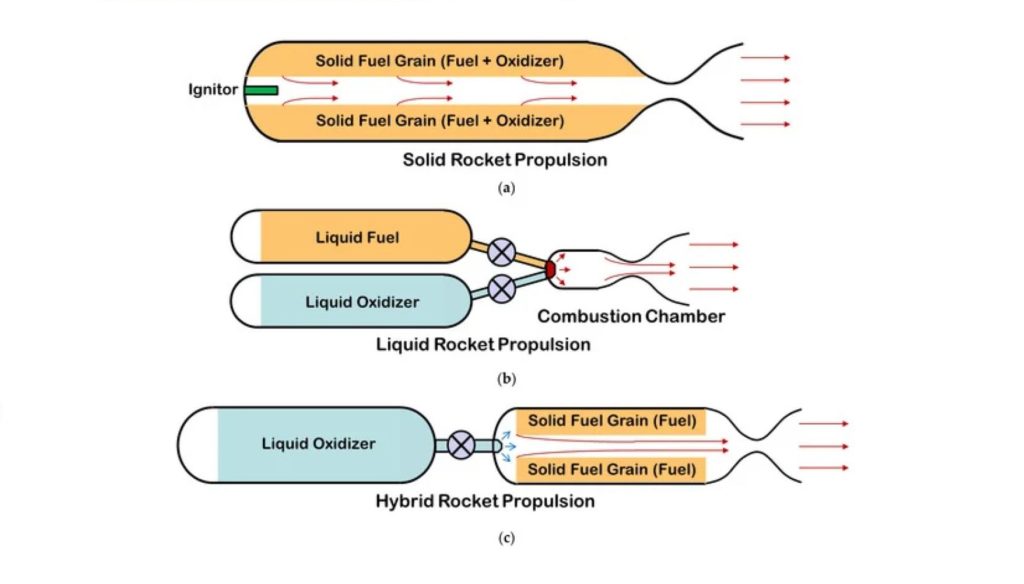
Nitrous oxide (N₂O), commonly known as laughing gas, plays a crucial role in rocketry as an oxidizer. Its unique properties make it an attractive choice for hybrid rocket engines, where it combines with a solid fuel to produce thrust. Nitrous oxide is favoured because it is relatively stable, easy to store as a liquid under moderate pressure, and decomposes exothermically to release oxygen, which supports combustion. Additionally, its self-pressurizing nature simplifies engine design by reducing the need for complex turbopumps. These characteristics have led to its use in various experimental and commercial rocket applications, offering a balance of performance, safety, and cost-effectiveness.
Nitrous oxide is typically stored as a liquid under moderate pressure, around 50 to 60 bar (725 to 870 psi) at ambient temperature. This pressure is sufficient to keep the gas in a liquid state, allowing for efficient storage and handling. The storage tanks must be designed to withstand these pressures and include safety features such as pressure relief valves to prevent over-pressurization. Temperature control is also important, as changes in temperature can affect the vapor pressure of the liquid and potentially lead to pressure fluctuations. Proper insulation and venting systems help maintain stable conditions, ensuring the nitrous oxide remains in a liquid phase ready for use in the rocket engine.
A suitable equation of state to describe the behaviour of nitrous oxide is the Peng-Robinson equation of state. This cubic EoS accounts for the non-ideal behaviour of gases and liquids by incorporating parameters that reflect molecular size and intermolecular forces. It is commonly used for refrigerants and propellants like N₂O because it quite accurately predicts phase equilibria and thermodynamic properties under varying pressures and temperatures typical of storage and rocket engine conditions. The Peng-Robinson equation is expressed as:
P = RT / (V – b) – a(T) / [V(V + b) + b(V – b)]
where P is pressure, T is temperature, V is molar volume, R is the gas constant, and a(T) and b are substance-specific parameters adjusted for temperature dependence. This model helps in designing storage systems and predicting performance in propulsion applications.
For N2O, the Peng-Robinson equation utilizes parameters such as the critical temperature (Tc), critical pressure (Pc), and acentric factor (ω). Common values are: Tc = 309.57 K, Pc = 7.24 MPa, and ω = 0.225. These parameters help determine the temperature-dependent attraction parameter a(T) and the co-volume parameter b, which represent the intermolecular forces and molecular size, respectively, enabling good modelling of N2O’s phase behaviour and thermodynamic characteristics.
Accurate prediction of nitrous oxide (N₂O) thermodynamic behaviour is essential in applications ranging from propellant feed systems and cryogenic storage to supercritical injection and reactive flow modelling. Among the available thermodynamic models, the Spann–Wagner Equation of State (EoS) [2] stands out as the reference formulation for N₂O, offering exceptional precision across the entire fluid domain.
The Spann–Wagner EoS belongs to the class of Helmholtz-energy-based equations of state, where all thermodynamic properties are derived from a fundamental equation expressed in terms of reduced density and temperature. This structure ensures internal consistency and enables accurate computation of key properties such as phase equilibria, heat capacities, speed of sound, and compressibility. Developed using extensive experimental datasets—including vapor–liquid equilibrium measurements, caloric data, and high-pressure P–ρ–T results—the model achieves reference-level accuracy in both liquid and vapor phases. It is therefore adopted by major standards bodies and implemented in high-fidelity property libraries such as REFPROP [3].
For engineering simulations, especially those operating near the critical point or in dense-fluid regions, this high accuracy is not merely beneficial—it is essential. Numerical solvers rely heavily on precise thermodynamic derivatives, and even small deviations can lead to instability, incorrect phase prediction, or unrealistic gradients in supercritical flow fields. The Spann–Wagner EoS provides the reliability needed for robust and physically meaningful results.
Why the Spann–Wagner EoS Outperforms Cubic Models for N₂O
While cubic equations of state such as Peng–Robinson (PR) and Soave–Redlich–Kwong (SRK) remain popular due to their simplicity and computational efficiency, their algebraic structure limits their ability to represent fluids with complex intermolecular interactions. N₂O is one such fluid: its molecular asymmetry and strong quadrupole moment produce significant non-ideal behaviour, particularly near the critical region and in dense phases.
Cubic EoS models typically struggle with:
- Liquid density predictions, often deviating by 5–10% or more
- Inaccurate compressibility and speed of sound
- Poor representation of heat capacities and enthalpy differences
- Weak performance near the critical point
- Unreliable supercritical thermodynamic gradients
These limitations become critical in high-fidelity simulations, where accurate phase behaviour and stable numerical derivatives are mandatory. In contrast, the Spann–Wagner EoS uses a multi-parameter Helmholtz formulation capable of capturing the detailed thermodynamic landscape of N₂O. It typically achieves:
- <0.1% error in density
- Highly accurate vapor–liquid equilibrium predictions
- Reliable thermodynamic derivatives for CFD and process simulation
- Consistent performance across subcritical, near-critical, and supercritical regimes
For advanced engineering applications, this level of accuracy directly translates into more stable solvers, more realistic physical behaviour, and greater confidence in simulation outcomes.
Syntech International Srl provides calculation and simulation support during the design of equipment that uses nitrogen oxide.
References.
[1] Aerospace 11(9), 739 (2024).
[2] Pure and Applied Chemistry 78(3), 541-612 (2006).
[3] Industrial & Engineering Chemistry Research. 61 (42), 15449–15472 (2022).
Author.

Luigi Ambrosi, M.Sc.
Process Chemist – Registered in Italy (BS)
Co-Founder and Chief Scientist at Syntech International Srl
l.ambrosi@syntechinternational.com